Why write in batches?
Every morning at ten the same small voice asks what you are going to post. You open the app, stare, close it. Three weeks later it is quiet, and you feel behind. The writing was never the problem. The deciding was.
A batch moves the decision to one hour a month. The rest of the month is just publishing.
How do I choose themes and material?
Three or four recurring themes that come from your work: something you learned this month, a situation from work (without names), an opinion you hold, and a concrete how-to. Write them in the Voice section of your brand book so the agent can keep them apart.
- Voice notes: speak for two minutes a week into your phone and ask the agent to write them out.
- Emails in which you explained something to a client.
- Questions clients have asked. Every question is a post.
- Five of your own posts that did well.
The agent makes posts out of what you give it. Give it nothing and it writes generically, and that shows.
Plan the month
Batch planner
Pick your rhythm and themes. Get the table your agent fills in.
12 slots over four weeks. Paste this into your instruction.
date | theme | first line | text | image | status
2026-11-09 | What I learned | [first line] | [text] | [image] | draft
2026-11-11 | A client situation | [first line] | [text] | [image] | draft
2026-11-13 | My view | [first line] | [text] | [image] | draft
2026-11-16 | A how-to | [first line] | [text] | [image] | draft
2026-11-18 | What I learned | [first line] | [text] | [image] | draft
2026-11-20 | A client situation | [first line] | [text] | [image] | draft
2026-11-23 | My view | [first line] | [text] | [image] | draft
2026-11-25 | A how-to | [first line] | [text] | [image] | draft
2026-11-27 | What I learned | [first line] | [text] | [image] | draft
2026-11-30 | A client situation | [first line] | [text] | [image] | draft
2026-12-02 | My view | [first line] | [text] | [image] | draft
2026-12-04 | A how-to | [first line] | [text] | [image] | draft
Read BRAND.md. Write twelve posts for LinkedIn for the next four weeks. Themes: [theme 1], [theme 2], [theme 3]. Use only my material below and do not invent facts. Each post: one thought, one concrete detail, at most 150 words, no hashtag lists (two at most), and no question at the end unless I would answer it myself. Put them in a table with the columns date, channel, theme, first line, text, image and status. Mark [question for me] where you lack a fact. My material: [paste] Five posts I am happy with: [paste]
How do I choose and edit?
- Strike the four weakest at once. They are the ones that could have appeared on any business.
- Rewrite the first line of every post that stays. That line decides whether anyone reads on.
- Read aloud. Where you stumble, the agent has written something you would never say. Fix it and ask the agent to add the rule to BRAND.md.
- Check numbers and names.
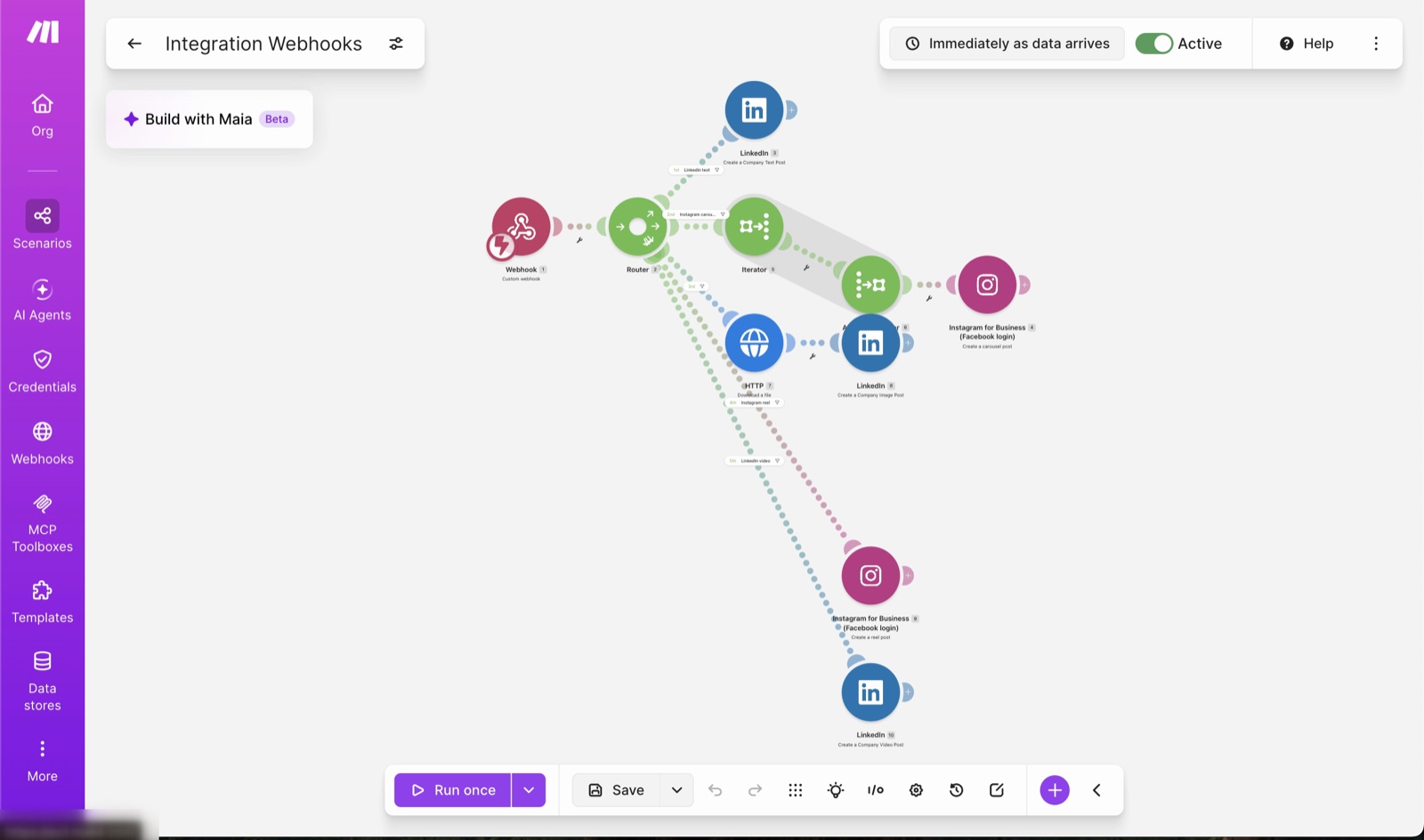
How do I publish automatically?
A scenario in Make reads your table every morning, picks the posts that are approved and due today, publishes them and marks them published. The agent writes the specification and helps you fix error messages, and you click the modules together. Test with one post to a test page first.
Make has a free plan with a limited number of operations a month and a minimum run interval. Check the current figures on Make's pricing page before you rely on it.
What becomes possible?
Posts are only the start. The same material can become things people choose to use and share.
- A series of six parts that build on each other, with a page that collects them.
- A small test or calculator people fill in, which leads to a conversation with you.
- A list of tools or tips that becomes a page people save.
- A newsletter that collects the best posts of the month.
From my posts in the last month and my clients' most common questions: suggest three things that are more than posts, like a series, a small test or a template, and sketch the one that would spread the most. Say who would share it and why.
Questions people ask
How many posts a week is right?
Three is a good start, but choose what you can keep up for three months. A steady rhythm beats a high one.
Will the posts sound like AI?
They should sound like you. That is what the brand book, your own examples and reading aloud are for.

Who is writing this
I am Nathaniel, a commercial operator. For twenty years, across four continents and more than fifteen ventures, I have taken research and young companies from idea to customer. Two KTH spin-offs reached joint development agreements with Fortune 500 partners. An indoor farm sold its full production within about ninety days and ended in a joint venture exit. This year I am a commercial expert for the European Innovation Council's Tech to Market programme. Now I build agents, because the hard part of new technology is rarely the technology. It is getting people to want it and use it.
Want to do this together?
In two hours I can build this with you: A month of posts in an hour.